Proclamation of the coalition “Serbia in the West – Experts Should Have a Say”
Photo: FoNet
BELGRADE – “Serbia Against Violence” the largest opposition coalition in terms of the number of parties and expected support, submitted its candidacy on Wednesday, 8 October, brining the total number of submitted lists to seven. Based on the media reports, at least another 10 lists are expected to be submitted before the deadline on 26 November.
All of these lists are expected to struggle to reach the 3% threshold of votes, not counting the minority lists, for which this threshold does not apply.
People’s Party, led by former Foreign Minister Vuk Jeremić and the “Good Morning” coalition of the Social Democratic Party (SDS) of former President Boris Tadić and “Enough is Enough” party are currently in the process of collection of signatures.
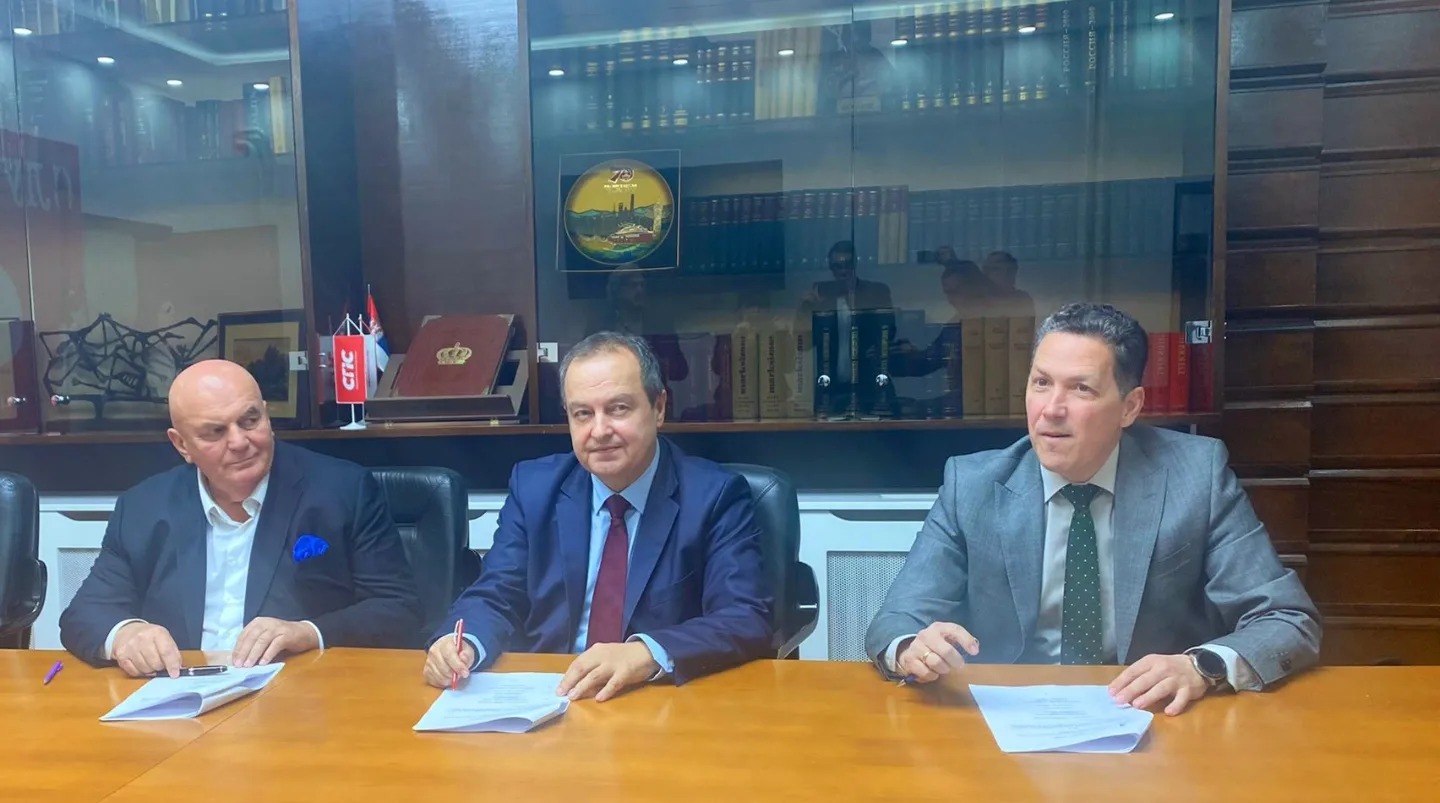
On Thursday, a coalition “Serbia in the West – Experts Should Have a Say” was announced. It is composed of the Civic Democratic Forum (GDF) and “Glas” (The Voice), small parties advocating Serbia’s accession to both EU and NATO, as well as the liberal New Party.
New Party participated in last year’s parliamentary election in a coalition with Boris Tadić’s SDS, winning 1.67% of the vote. GDF last participated in the 2020 election as a part of coalition which won 0.95% of the vote. Both parties have changed leadership since then.
This coalition has been supported by some prominent pro-Western public figures, including the writer Svetislav Basara and journalist Boško Jakšić.
Two political actors also announced their comeback – Čedomir Jovanović, leader of the Liberal Democratic Party (LDP), as well as the regional League of Social Democrats of Vojvodina (LSV). Jovanović partially withdrew from politics in 2020, after he had won just 0.32% of the vote in that year’s parliamentary election. LSV that year ran in the previously mentioned coalition with GDF, which also failed to reach 1%.
Both LDP and LSV were once prominent political players and among the most staunchly pro-Western forces in the country, but their relevance decreased following a series of poor election results. Nenad Čanak, long-time leader of LSV, withdrew last year and was succeeded by Bojan Kostreš.
Another pro-Western organisation, founded much more recently, is the “European Path” led by former Minister of Economy Rade Basta. Basta spent only several months in the government and was voted out after he started advocating for Serbia to impose sanctions on Russia. The profile of his party has remained low, however.
Dr Branimir Nestorović, a highly controversial figure who became prominent in Serbia at the outset of the COVID-19 pandemic, also announced his intention to run. Nestorović, described by some as a conspiracy theorist, has a high degree of popularity on You Tube and in other non-mainstream media. Last year, he supported the coalition led by the right-wing Dveri, but was not its candidate for MP.
In addition to these lists, at least three other lists representing national minorities – Bosniak SDA, Bosniak-Croat SDA-DSHV coalition and the list of Albanian-minority parties – are also expected to be submitted.
This will, potentially, bring the number of lists in the election to at least 17. This is not an unusual number for Serbia, which regularly features 15 to 20 lists for the parliamentary election.