
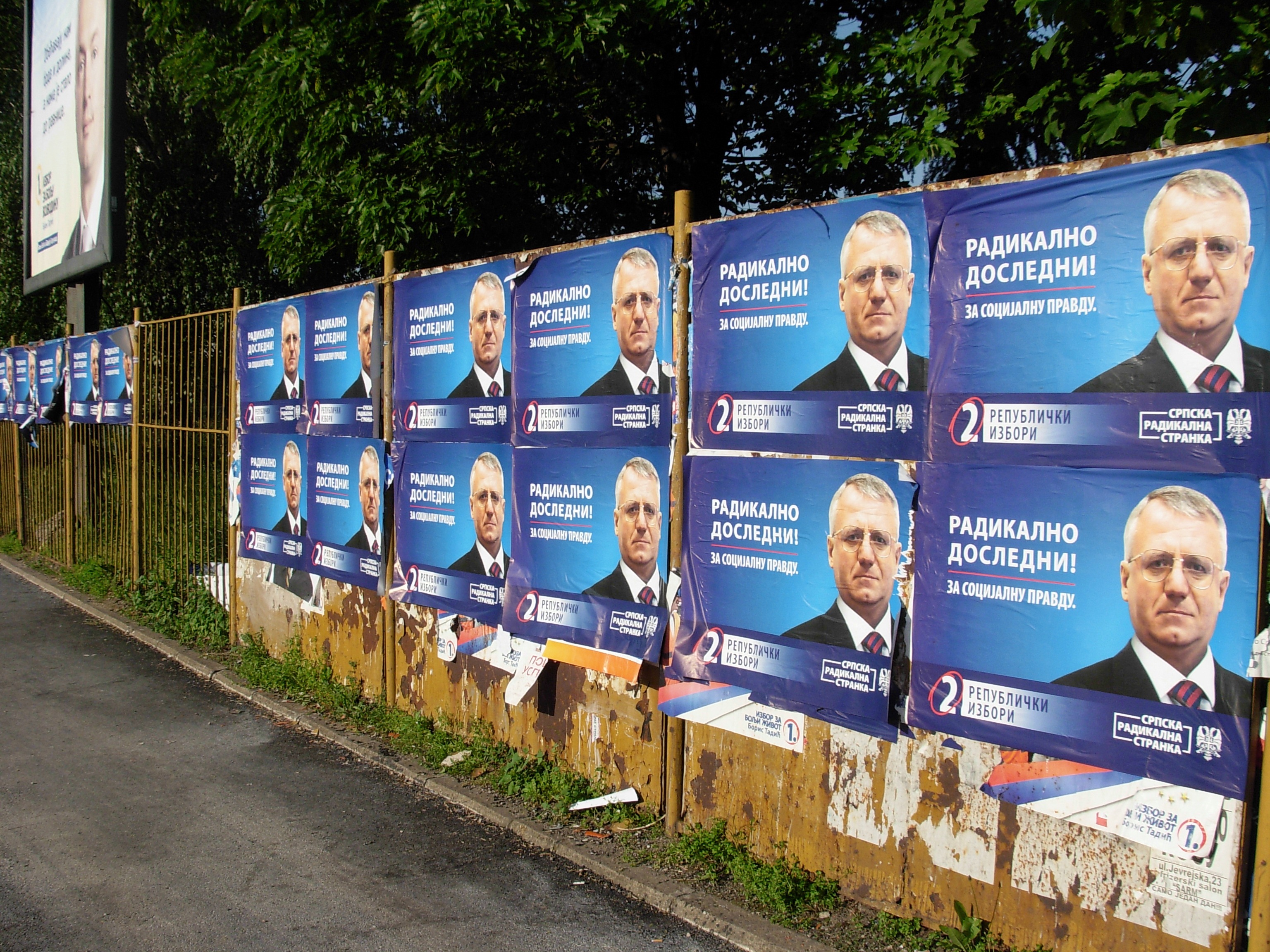
BELGRADE – Right-wing ultra-nationalist Serbian Radical Party (SRS), the former party of the President of Serbia Aleksandar Vučić, will run in local elections, including the Belgrade election, with the ruling Serbian Progressive Party (SNS).
This was announced on Wednesday morning by Vojislav Šešelj, a long-time leader of the party, which commanded the largest support in Serbia in the mid-2000s. The party is currently on the margins of the political scene.
Šešelj stated for pro-government Happy TV that SRS would run in a coalition with SNS on local levels, while on the national level it will have a separate list. SRS leader stated that there was no difference between the parties when it came to local issues, just the national ones.
SRS is strongly anti-EU and strongly pro-Russian, with its main political goal being the creation of the “Greater Serbia”, country that would include all ethnic Serbs in the Balkans.
Šešelj rose to prominence as the organiser of Serb volunteers in 1990s Yugoslav wars, as well as the promoter of ethnic hatred. He is also regarded as the early political mentor of President Vučić, who joined SRS in 1993.
Following the change of power in Serbia in 2000, Šešelj spent 11 years in the Hague, where he was charged and sentenced by the International Criminal Court for former Yugoslavia for his role in instigating the deportation of ethnic Croats from Hrtkovci (Serbia).
While Šešelj was in the Hague, SRS suffered an acrimonious split in 2008, when its second and the third most prominent members, Tomislav Nikolić and Aleksandar Vučić left to form the Serbian Progressive Party, which has been in power in Serbia since 2012.
Upon Šešelj’s return from the Hague in 2014, he seemed to be on a collision course with his former party deputies. However, after a short period of public criticism of Vučić’s government, SRS became an informal ally of the ruling party, turning its attacks towards the rest of the opposition.
In 2022 parliamentary election, SRS managed to attract only 2.22% of the vote and did not cross electoral threshold.
Vojislav Šešelj on posters
Photo: Wikimedia Commons


