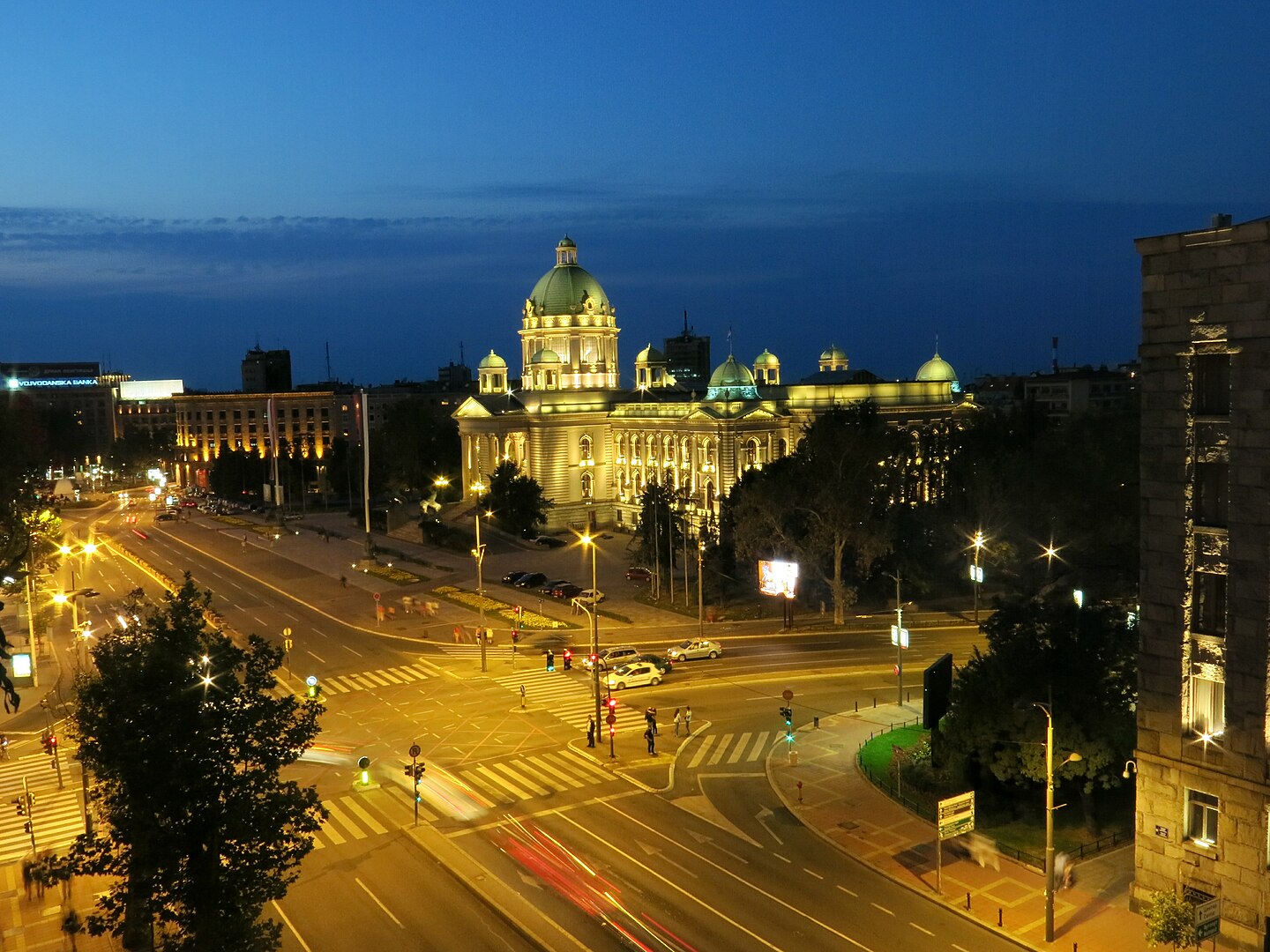
National Assembly of Serbia
Photo: Wikimedia / Dungodung
In recent years, especially after the opposition boycott of the 2020 elections, electoral conditions have been one of the most important political issues in Serbia. The main criticism revolved around the ruling majority’s media dominance, the use of state offices for party promotion, and pressure on voters, especially those employed in the public sector.
Electoral conditions have been in focus not only among the opposition, but also parts of the international community. Boycott of the elections by almost all opposition parties in Serbia resulted in two rounds of inter-party dialogue between government and the opposition parties, mediated by European Parliament. However, the dialogue did not lead to significant improvements, and this year’s elections scheduled for 17 December are being held in the same atmosphere.
Before the 2022 presidential and parliamentary elections, there was a slight shift towards implementing the recommendations of OSCE’s Office of Democratic Institutions and Human Rights (ODIHR), which regularly monitors elections in Serbia. These activities were a product of the negotiations mediated by European Parliament, but they mostly involved technical changes that did not significantly improve the situation.
The latest ODIHR report, published last year after the elections, noted many remaining problematic elements of Serbia’s electoral conditions.
The report states that elections presented diverse political options, but a number of shortcomings resulted in the uneven playing fields, favoring the incumbents. While fundamental freedoms were largely respected during the campaign, the combined impact of unbalanced access to media, undue pressure on public sector employees to support the incumbents, significant campaign finance disparities and misuse of administrative resources led to unequal conditions for contestants.
“Recent legislative changes adopted following extensive discussions among the ruling parties, and some of the opposition included some welcome improvements, but key aspects of the electoral process require further reform and implementation“, the report stated, referring to the legislative changes adopted in the context of the EU-mediated dialogue.

EU mediators meet with Vučić in 2020
Photo: X / VladoBilcik
ODIHR noted that public broadcaster, Radio Television of Serbia (RTS), dedicated 70% of its time in political shows to President Aleksandar Vučić and his ruling party, Serbian Progressive Party (SNS). Private national television channels (Pink, Happy, B92, Prva) dedicated as much as 90% of their airtime to the ruling party and Vučić.
Observes of ODIHR also recorded a significant number of reports of pressure on voters to support the ruling majority. The report also states that candidate sometimes failed to separate their official functions from their participation in political party campaign, giving them a significant advantage in the campaign.
In its report, ODIHR provided 26 concrete recommendations for the improvement of electoral conditions. However, since then, the government has not taken any visible steps to amend the laws to enhance electoral conditions.
CRTA, civil society organization which is engaged in monitoring the electoral process in Serbia, stated in October that the government had not fulfilled the recommendations regarding key issues, and that progress had only been made in administrative aspects.
“Out of the 15 recommendations that can be assessed at this time, none have been fully implemented”, CRTA underlined, adding that out of the nine priority recommendations, only one, related to the introduction of standardized training for all members of local electoral commissions and polling boards, has been partially implemented.
“The analysis shows that progress has been achieved only in administrative aspects, while recommendations related to the key issues in the electoral process, such as voter pressure, misuse of public resources and media reporting, remain unfulfilled”, CRTA concluded.